

.svg)
Learn more
.svg)







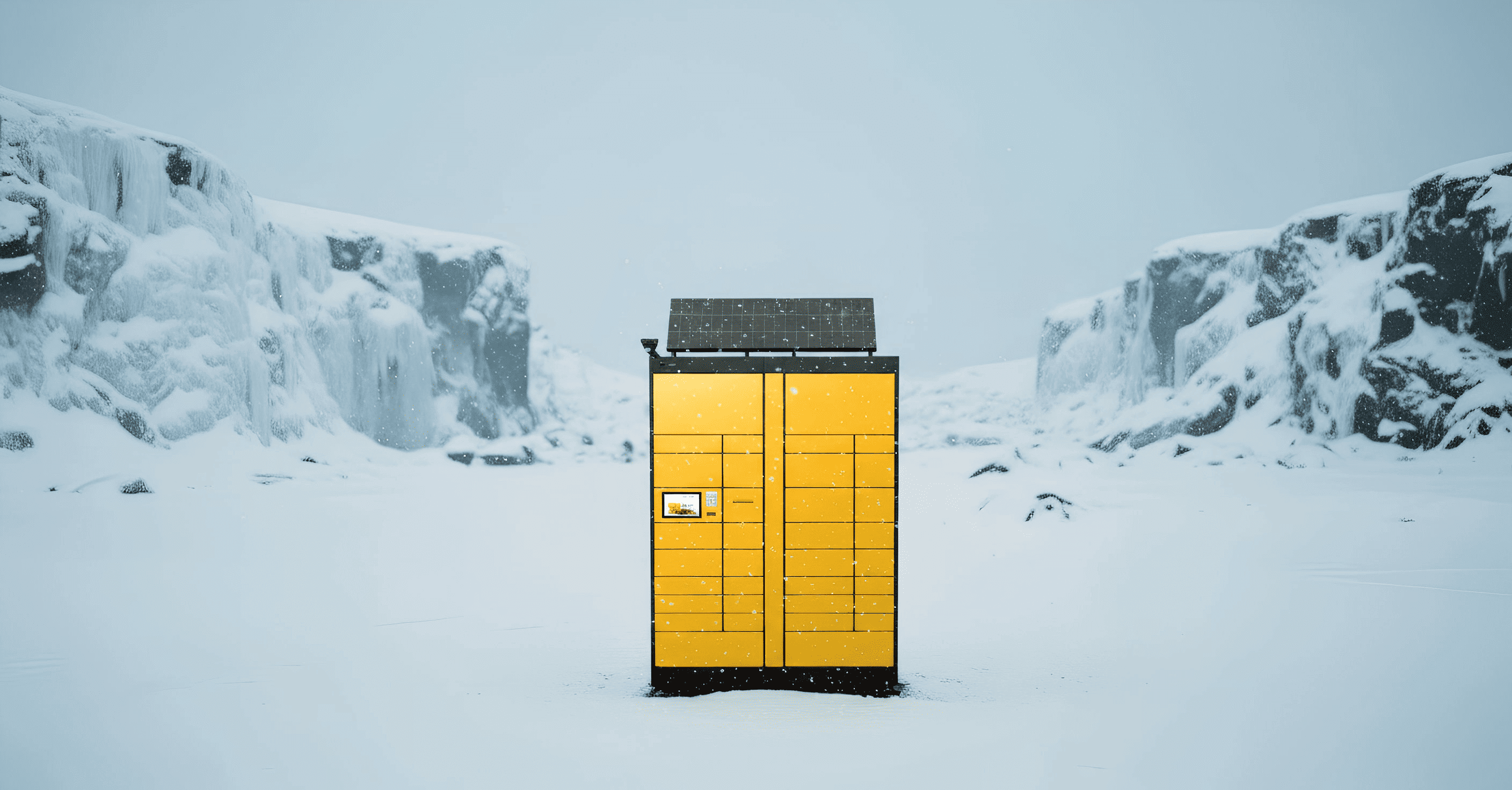
Countries in the far north offer valuable lessons for building cold-weather logistics strategies that actually work.
When temperatures plunge below zero and ice builds up overnight, it’s not just people who feel the pressure — last-mile infrastructure does too. In Arctic and sub-Arctic regions, parcel lockers face one of the harshest operational environments in the world: moisture, snowdrifts, and rapid freeze-thaw cycles that can compromise even the strongest equipment.
Yet experience shows that performance in such conditions depends on more than materials alone. It’s about foresight — understanding how local climate patterns, terrain, and water proximity affect locker operation year-round.
Across cold regions, simple yet data-driven measures help ensure reliability:
Sometimes, relocating a locker just a few hundred meters away from a river or shaded area can prevent freezing issues for an entire year.
The main insight for global planners is clear: successful parcel locker networks are not only well-engineered — they are well-adapted. Building resilient last-mile infrastructure means respecting the environment it operates in and planning every site with long-term stability in mind.

Head of Research at Kyburz

Founder & CEO at Mily Technologies

The Information Factory

Co-Founder and COO at Shiptimize

Se hai domande o hai bisogno di ulteriori dettagli, compila il modulo di contatto e ti risponderemo a breve.
%201.svg)

Sii il primo a conoscere tendenze del settore, strategie e utili insights





.svg)
.png)


.svg)